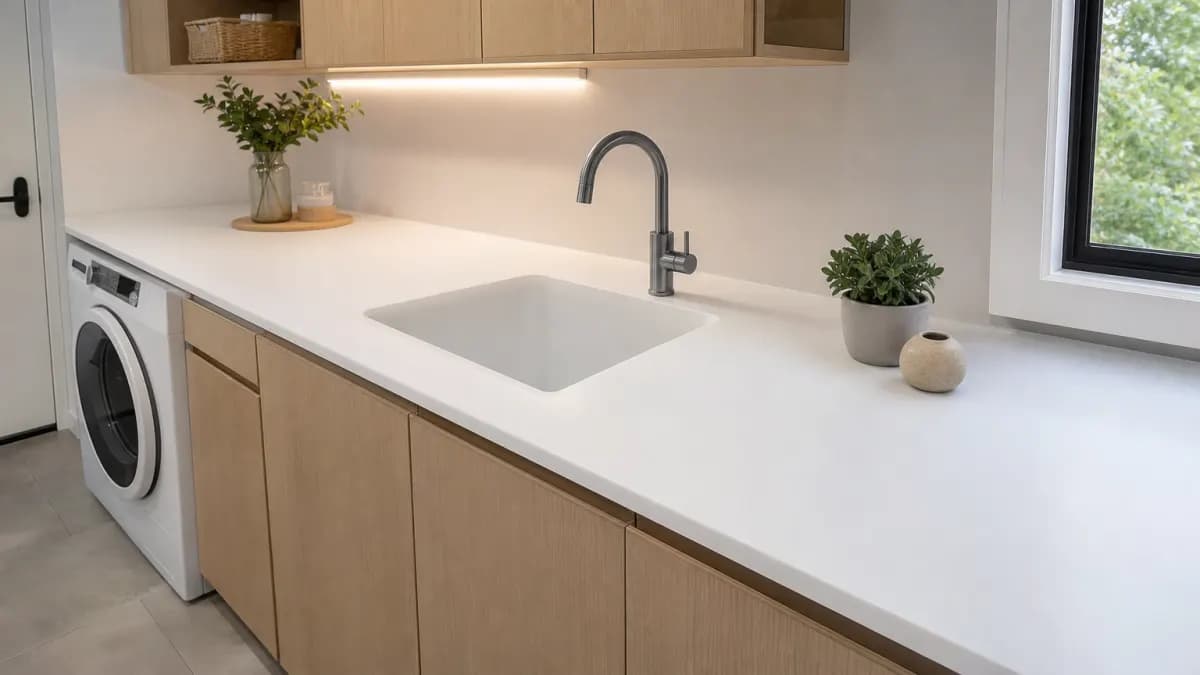
What solid surface is
Solid surface is a manufactured sheet made of acrylic polymer and natural minerals, with the color running all the way through. Corian, the original brand, is the name most homeowners use for the whole category. Unlike quartz or granite, it is not cut from a stone slab with a bridge saw; it is worked with woodworking-style tools, and pieces are joined with color-matched adhesive and sanded flush so the seams are nearly invisible.
Solid surface has no published Mohs rating in our sources, and in practice it is much softer than stone. It will show fine scratches from knives and sliding pans. The trade-off is that those scratches, and even small scorches and stains, can be sanded or buffed out.
Solid surface countertop cost
Typical national ranges from published cost guides; local quotes vary with the brand, color and number of integrated sinks.
| Item | Typical national range |
|---|---|
| Solid surface, installed | $40–$100/sq ft |
| Quartz, installed (for comparison) | $50–$150/sq ft |
| Laminate, installed (for comparison) | $15–$60/sq ft |
| Single bathroom vanity top, installed | $200–$1,000 (varies by material and size) |
| Old top removal | $50–$300+ |
Solid surface usually lands between laminate and quartz. On a small or complex job, such as a vanity with an integrated bowl or a long run that would otherwise need stone seams, it can be the most cost-effective way to get a clean, sink-to-wall look. For full-kitchen comparisons, see countertop cost in Sacramento.
How solid surface performs in a Sacramento home
Heat
Heat is solid surface's weak point. Hot pans can scorch or damage it, so trivets are mandatory, not optional. Keep toaster ovens and air fryers on a heat-resistant board. Small scorches can often be sanded out; a deep burn may need a patch.
Sun and outdoor use
Solid surface is an indoor material. For a patio or poolside counter that faces Sacramento summers with about 20+ days a year at 100°F or hotter, look at outdoor kitchen countertops in granite or porcelain instead.
Stains, hard water and cleaning
The surface is non-porous and needs no sealing. Coffee, wine and hard water rings clean off with mild soap or a non-abrasive cleaner. Matte finishes, which are the most common, can be refreshed with a gentle abrasive pad when they start to look patchy. Glossy finishes show scratches and wear sooner. Darker solid surface colors also show fine scratches and dust more than light, speckled colors, so a mid-tone or patterned color is the forgiving choice for a busy kitchen.
Integrated sinks and seamless design
This is where solid surface stands apart. Sinks and vanity bowls can be made from the same material and bonded into the top with no rim or visible seam, so there is no crevice for grime at the sink edge. Coved backsplashes can be formed the same way, curving up from the counter. Long runs and L-shapes can be joined so they read as one piece, which is useful in galley kitchens, laundry rooms and accessible designs.
Edges are equally flexible: eased, bullnose, bevel and ogee are all routed in the shop, and the material can be thermoformed into curves. See countertop edge profiles for edge names and what they look like. Because the fabricator can rout and bond the material in the shop, small details such as a drainboard grooved into the counter beside the sink or a marine edge that keeps spills from running onto the floor are practical in solid surface and difficult in stone.
Thickness and installation
Solid surface is lighter and thinner than stone and is typically installed over a support built onto the cabinets, with a built-up front edge so it reads thicker than the sheet itself. Installation follows the general timeline for countertops: about 1–3 weeks from template to install, with the install itself usually done in a day.
Licensing note: California's D-12 Synthetic Products classification specifically covers installing "synthetic counter tops." Some solid surface work is done under other classifications. Whoever you hire, check the license on the CSLB website.
Repairs and long-term care
- Daily: warm water and mild soap, or a non-abrasive household cleaner.
- Fine scratches on matte finishes: a gentle abrasive pad, using light circular strokes.
- Deeper scratches, scorches or chips: a solid surface technician can sand, fill or patch the area so it blends.
- Always use trivets and cutting boards.
- No sealing, ever.
An older solid surface counter can often be professionally refinished rather than replaced. If yours is past that point, see countertop replacement.
Solid surface vs. quartz vs. laminate
Solid surface usually gets compared with engineered quartz on one side and laminate on the other. The table sums up the practical differences.
| Solid surface | Quartz | Laminate | |
|---|---|---|---|
| Installed cost | $40–$100/sq ft | $50–$150/sq ft | $15–$60/sq ft |
| Seams | Nearly invisible | Visible, kept tight | Visible |
| Integrated sink | Yes, same material | Limited | No; top-mount sinks |
| Heat | Scorches; trivets required | Resin can burn; trivets required | Can scorch or blister |
| Scratch repair | Sand or buff out | Hard to repair | Not repairable |
| Sealing | Never | Never | Never |
If your current counter is laminate and you want an undermount or integrated sink without the cost of stone, solid surface is the natural step up. If you want a harder surface with more realistic stone looks, compare quartz vs. granite instead.
Who solid surface suits, and who should skip it
Solid surface suits bathrooms, kids' baths, laundry rooms, rentals, accessible kitchens and anyone who wants seamless integrated sinks or a quiet, warm matte look. It also suits owners who prefer a surface they can repair themselves.
Skip it if you cook with a lot of high heat, want the depth and veining of real stone, or plan an outdoor kitchen. For a material overview, start with our guide to quartz and granite countertops in Sacramento.
Main guide: quartz and granite countertops in Sacramento.