Countertop Materials for Sacramento Homes
Most Sacramento countertop jobs come down to three materials: engineered quartz, granite and quartzite. They cost about the same per square foot at the entry level, so the choice usually turns on looks, maintenance and how you cook. Marble, soapstone, porcelain and solid surface fill specific needs.
Quartz (engineered stone)
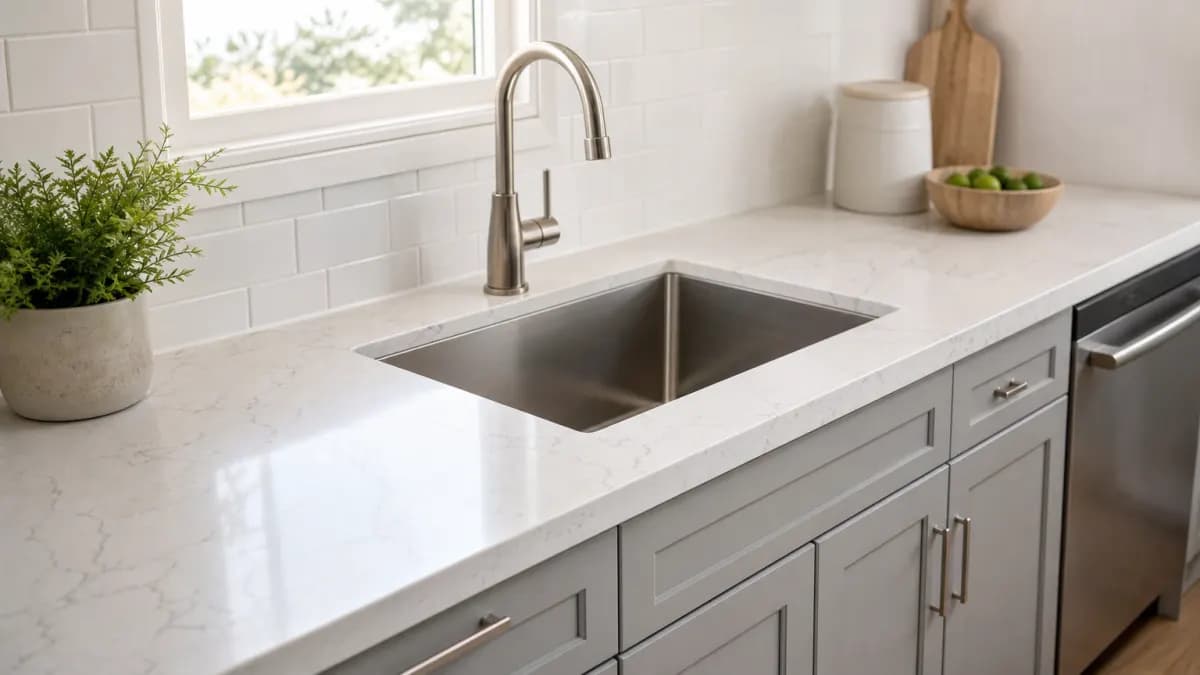
Quartz countertops are about 90% ground quartz bound with resin and pigment. The surface is non-porous, so it never needs sealing, and the color is consistent from slab to slab, which makes seams on long runs easier to match. The resin is the weak point: a hot pan can scorch or discolor it, so use trivets, and standard indoor quartz is not warrantied for outdoor use. See quartz countertops for slab sizes, finishes and California's fabrication rules.
Granite
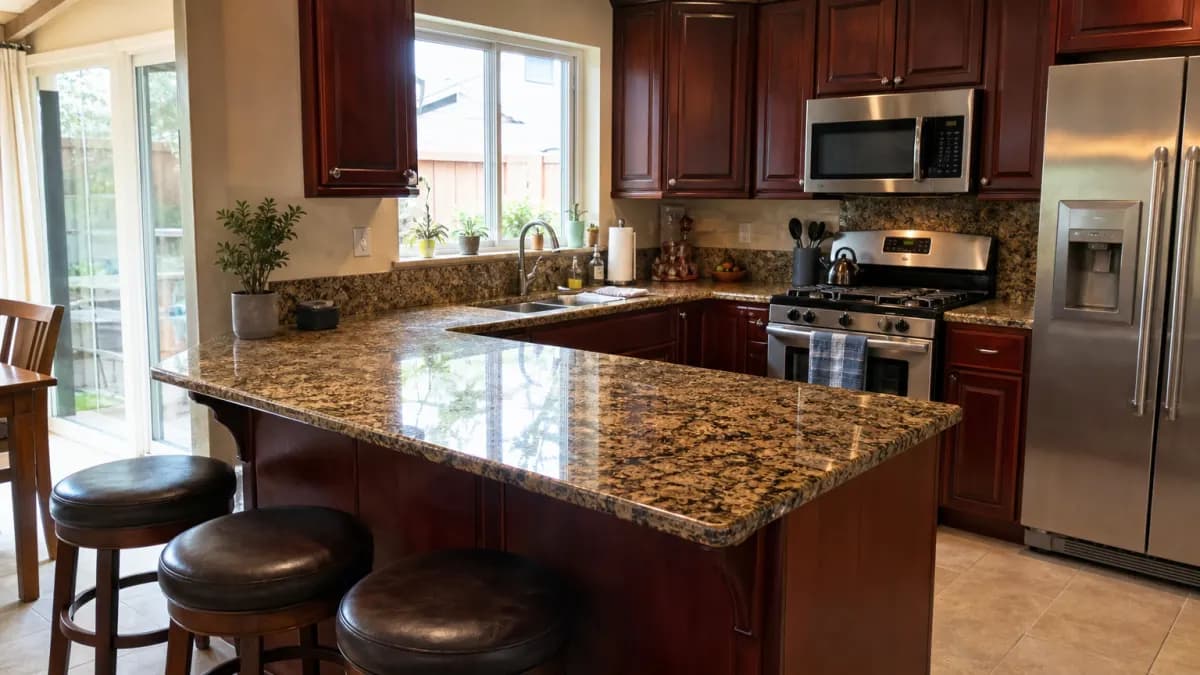
Granite is natural igneous stone, about 6 to 7 on the Mohs scale, quarried in blocks and cut into slabs. It takes a hot pan, resists scratches and works outdoors. Because it is porous to varying degrees, most granite is sealed and rechecked with a simple water-drop test. Every slab is different, so you pick your actual slab at the yard. Price is sold by level, from entry colors to exotics. Details on granite countertops.
Quartzite
Quartzite is metamorphosed sandstone, about 7 on the Mohs scale, with the light, veined look of marble and the hardness of granite or better. Some stone sold as quartzite is actually a dolomitic marble that etches. A glass scratch test and a drop of lemon juice on a sample tell you which you have. Compare options on quartzite countertops.
Marble, soapstone, porcelain and solid surface
- Marble (calcite, about 3 to 4 on the Mohs scale) etches from lemon, wine and vinegar. It suits bathrooms and bakers who accept patina.
- Soapstone is soft (talc-rich) but dense and chemically inert. It needs no sealing; mineral oil darkens it evenly.
- Porcelain and sintered stone come in thin slabs (6, 12 and 20 mm). They resist heat and UV, which suits outdoor kitchens, but thin edges chip more easily.
- Solid surface (acrylic, Corian-type) is seamless and repairable, with integrated sinks, but is softer and less heat tolerant than stone.
How Much Do Countertops Cost in Sacramento?
Countertops are priced per square foot installed, which bundles the slab, fabrication and installation. The ranges below are typical national ranges from cost guides; we found no Sacramento-specific survey, and a fabricator's written quote for your layout is what counts.
| Material | Typical installed cost |
|---|---|
| Quartz | $50 to $150 per sq ft (premium designs to $200) |
| Granite | $50 to $150 per sq ft (exotic to $250) |
| Quartzite | $65 to $200 per sq ft |
| Marble | $60 to $200 per sq ft |
| Soapstone | $55 to $150 per sq ft |
| Porcelain | $50 to $120 per sq ft |
| Solid surface | $40 to $100 per sq ft |
A typical kitchen has 30 to 50 sq ft of counter. In quartz or granite that usually lands between $2,500 and $7,500, with high-end stone and large islands at $10,000 or more.
Add-ons that move the price
| Item | Typical cost |
|---|---|
| Sink cutout | $0 to $300 (the first is often included) |
| Cooktop cutout | $100 to $200 |
| Edge upgrade | $10 to $40 per linear ft (eased edge usually included) |
| Removing old tops | $50 to $300 or more |
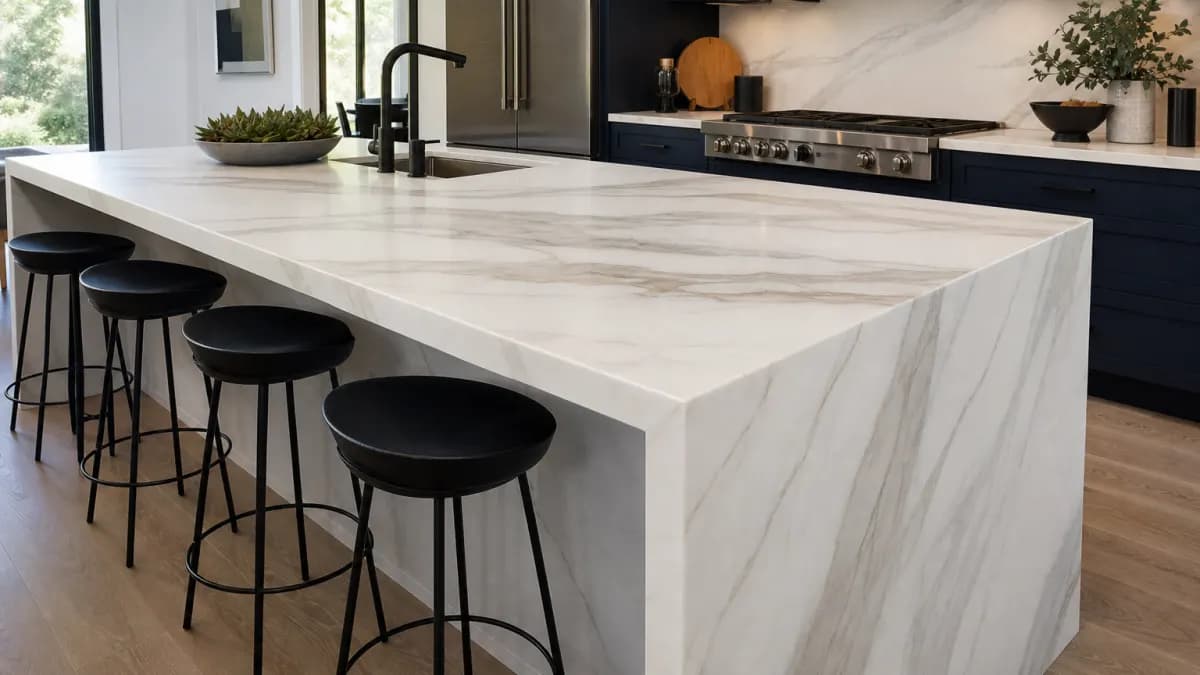
| Waterfall end panel | $500 to $2,000 per end |
| Plumbing reconnect | $45 to $200 per hour |
Slab Sizes, Thickness and Seams
Slab sizes
A standard quartz slab is about 120 × 56 inches; jumbo slabs run about 130 × 65 inches. Granite slab sizes vary by quarry block. Slab size decides how many slabs your layout takes and where seams fall, which is why two kitchens with the same square footage can price differently.
2 cm vs. 3 cm
2 cm is about 3/4 inch; 3 cm is about 1-1/4 inch. 3 cm sits directly on the cabinets and is the usual choice for kitchen counters. 2 cm is lighter and is often used on vanities and backsplashes; on kitchen counters fabricators commonly add a plywood subtop or a laminated or mitered edge so it reads thicker.
Overhangs and seams
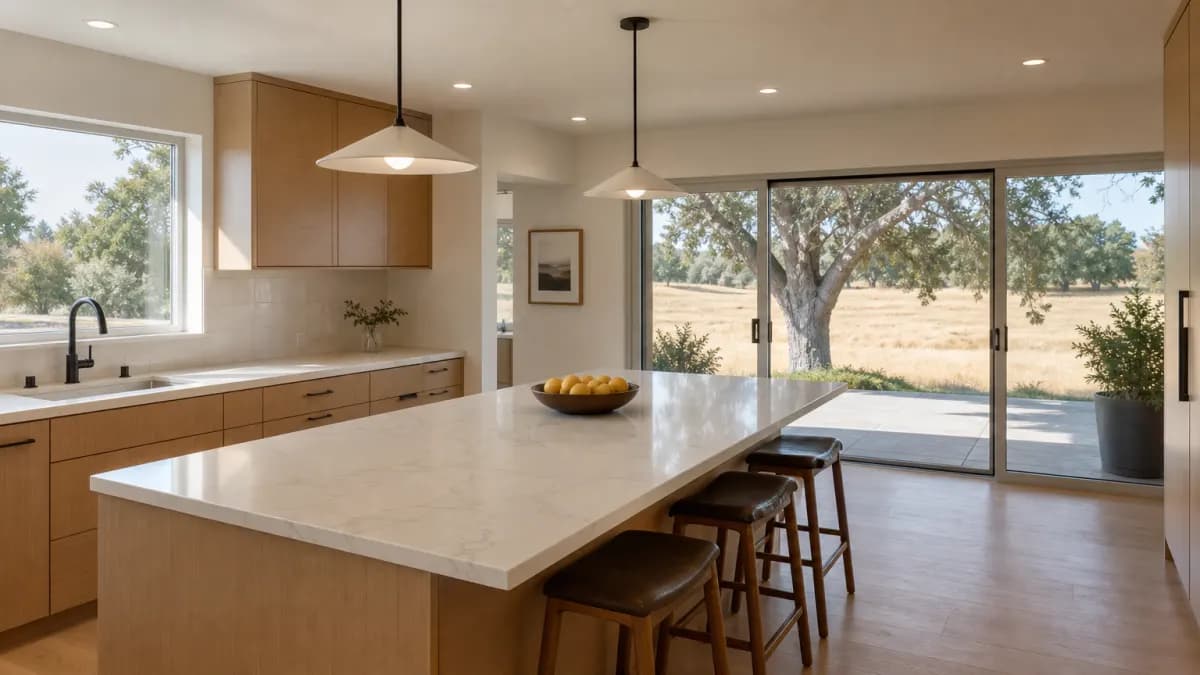
Industry guidance limits an unsupported overhang to about 10 inches for 3 cm stone and 6 inches for 2 cm, and never more than a third of the top's width. Deeper seating overhangs need corbels or hidden steel brackets. Seams belong where they are least visible and best supported, and an L-shaped or long island run usually needs at least one.
How Countertop Fabrication Works: Templating to Install
- Measure and quote. The fabricator measures or works from your drawing and quotes per square foot plus cutouts and edges.
- Choose the slab. For natural stone you pick and tag your actual slabs at a slab yard. For quartz you pick a color from samples.
- Cabinets set and level. New cabinets must be installed and level before templating. Have your sink on site and cooktop specs ready.
- Templating. A technician makes a digital laser template or a physical template of the exact cabinet tops, walls and appliance openings.
- Fabrication. Slabs are cut on a bridge saw, CNC or waterjet, edges are profiled and polished, and sink and cooktop holes are cut. California requires wet cutting methods under Cal/OSHA's silica standard.
- Install day. A typical kitchen installs in one to two days. Tops are set, seams epoxied, undermount sinks attached and natural stone sealed.
- Reconnect. A plumber reconnects the sink, faucet and disposal; the cooktop is set in.
From templating to installation usually takes one to three weeks, depending on the fabricator's schedule and the material.
Countertop Edge Profiles
The edge profile changes the look more than most people expect, and it affects chipping. Most fabricators include a basic edge and charge per linear foot for decorative ones.
- Eased (pencil): square with slightly rounded corners. Usually included; clean and chip-resistant.
- Half bullnose and full bullnose: rounded top or fully rounded edge. Soft to lean on, good for families.
- Bevel: a 45-degree chamfer on the top corner.
- Ogee and dupont: traditional decorative profiles, usually an upcharge.
- Mitered: two pieces joined at 45 degrees to make a 2 cm top look thick, or to run the slab down the side as a waterfall.
Sinks and Cutouts
Stone suits undermount sinks: the sink hangs below the polished cutout, so you can wipe crumbs straight in. Top-mount (drop-in) sinks sit on the counter and are common in replacements. Farmhouse (apron-front) sinks need a cabinet built for them, and integrated sinks are molded from solid surface. Faucet holes are drilled on site or in the shop; bring the faucet spec and decide how many holes you need (faucet, soap, filter, air gap) before templating.